
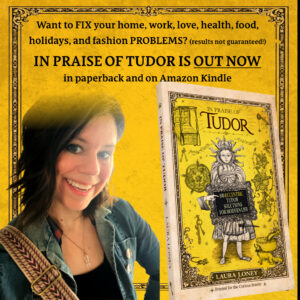
Get your own slice of eccentricity with Laura Loney’s latest book “In Praise of Tudor: 100 Eccentric Tudor Solutions for Modern Life”. It’s the perfect present for your Tudor loving friend who already has everything – they don’t have this yet!
GET THE BOOK: https://mybook.to/InPraiseOfTudor
Here’s an interview with Laura on how she came to write this very different book…
What inspired you to write In Praise of Tudor, and what fascinates you most about life in Tudor England?
By bridging the gap between the past and present, with a dash of humour, I aim to help make Tudor English history more enjoyable, memorable, and relevant not only to history buffs, but those who cross their arms and say, “History is boring.” The mysteries surrounding Tudor portraits and the intrigue of Anne Boleyn consistently draw me into the feisty and unpredictable world of life at the Tudor court. My love of social history and Tudor daily life keeps me daydreaming of Tudor customs and traditions, wattle and daub homes, and butter churns.
Your book explores everything from Tudor food and fashion to work and relationships. Which aspect of Tudor daily life surprised you the most during your research?
The efficiency, skill, and detail involved in the Tudor papermaking process surprised me as I often associate historical documents and manuscripts with parchment and vellum. I love how thrifty and environmentally sound the Tudors were and their papermaking process does not disappoint. It’s very satisfying (and a bit humorous) to envision worn linen scraps (ragbag undergarments) being soaked and bashed until they’re a pile of mushy pulp and turned into paper fit for a king. Reduce, reuse, and recycle linen undies! (Waste not, want not is also appropriate.)
Many people think of kings, queens and political drama when they think of the Tudors. Why do you think Tudor customs and traditions and the experiences of ordinary people are just as important?
While the dysfunctional drama of the Tudor court is endlessly fascinating, the majority of the population, as today, could not afford to dance in gold and palace hop in a world of fancier-than-fancy fineries. The everyday Tudor people are more relatable to today’s average reader in a variety of ways, such as, having to clean our kitchens, make our beds, and work with our hands, though I do include many Tudor customs and traditions of the rich and famous too.
The book combines humour with historical research. Were there any particularly amusing stories about Tudor women, Tudor households, or everyday life that made you laugh while writing?
I was laughing all the way through (minus the editing process) and I hope that translates to the reader. The 16th century lady who was caught eating candles, not because she was starving, but because she likely enjoyed the texture, consistently makes me grin. Imagine inviting her to your home for a dinner party only to find all your candles eaten, the dessert left untouched, and the other guests left tittering in the dark. Nevermind that modern candles might be solar or battery-powered. Stomach (and teeth) of steel!
If readers could take away one lesson or insight from your exploration of Tudor England, what would you hope it would be?
Laughing and singing was once considered medicinal and good for one’s health. Tudor humour may not be your cup of tea, but any type will do. I hope readers will learn some eccentric Tudor tidbits to share at parties while having a giggle. Laugh whenever you can because life’s too short not too, even without the deadly Tudor Sweating Sickness (not a disease of the armpits).
Related Posts

Get Anne Boleyn fiction in this exclusive offer
EXCLUSIVE DEALS - Two Boleyn books for just 99c/99p each…

Best selling Historical Thriller – The Colour of Poison
Have you got your copy of The Colour of Poison…
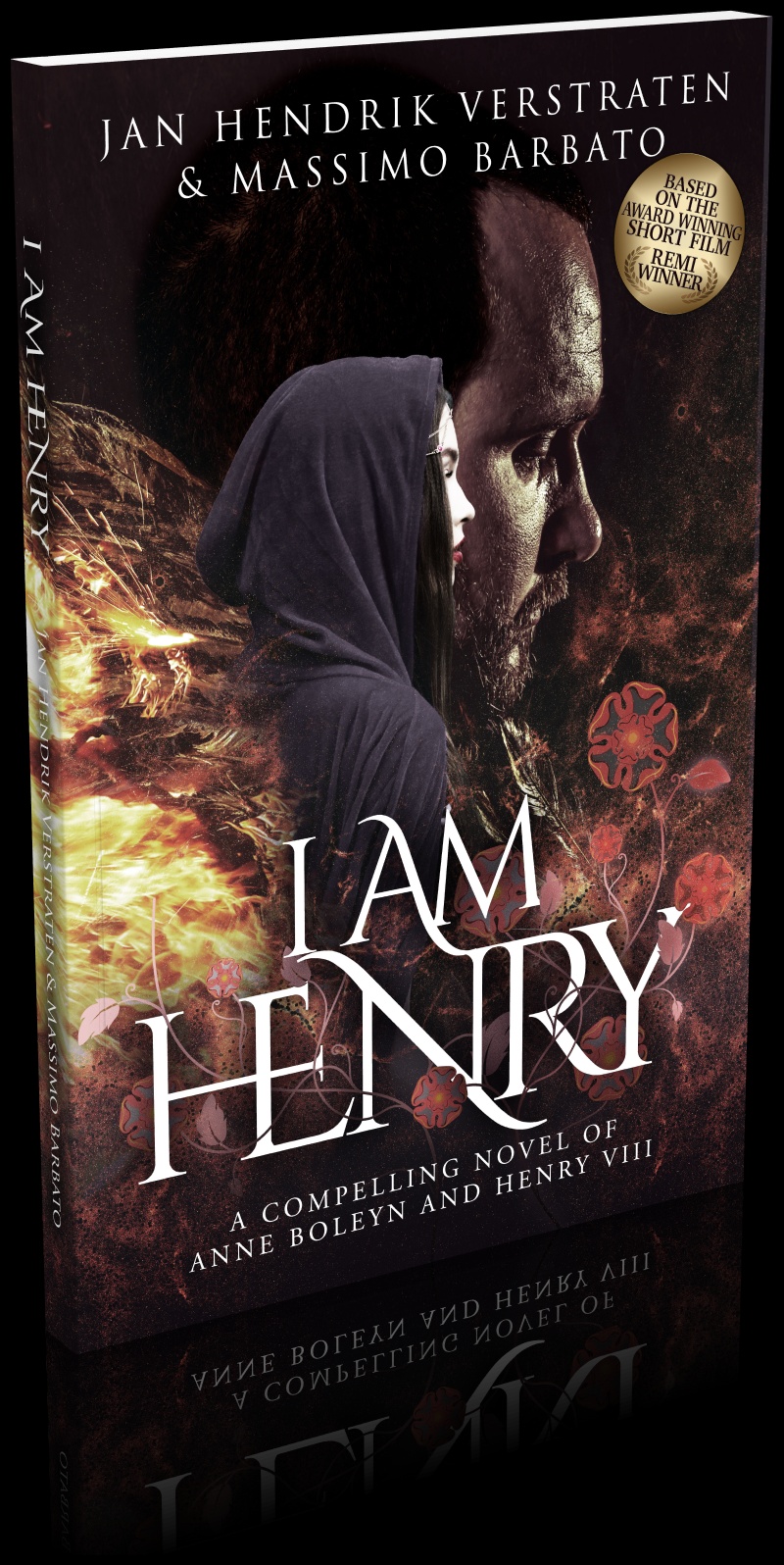
The authors of I Am Henry speak about their book
Here is a quick video with Massimo and Jan Hendrik,…